High Performance Computing for BIO726P Master’s Students

On Thursday October 2, from 2pm to 5pm at Queen building, 83 students from the MSc in Bioinformatics (BIO726P) participated in a hands-on High Performance Computing (HPC) training session at Queen Mary University of London (QMUL), using the Apocrita HPC cluster. The session began with an interactive Menti poll to gauge students’ prior knowledge of HPC and Apocrita. Menti provided an anonymous and engaging way to collect responses. We asked seven basic questions, including: “What does HPC mean?”, “What is a cluster at QMUL?”, "Have you ever used an HPC cluster before?", and one of the most thought-provoking:
“Does increased use of HPC resources make simulations run faster?"
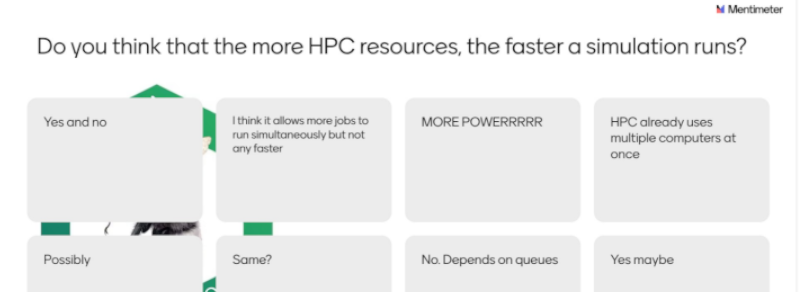
To explore this question further, students completed three exercises involving HPC job submission. The training was conducted using the Open OnDemand platform, with a dedicated environment prepared by the ITS Research team.
Students exercise:
- Transferring data from their local devices to Apocrita
- Running basic Linux commands
- Executing introductory HPC tasks
We’re pleased to report that students engaged enthusiastically and completed all exercises successfully. A slide deck of 67 slides used during the session can be accessed here.
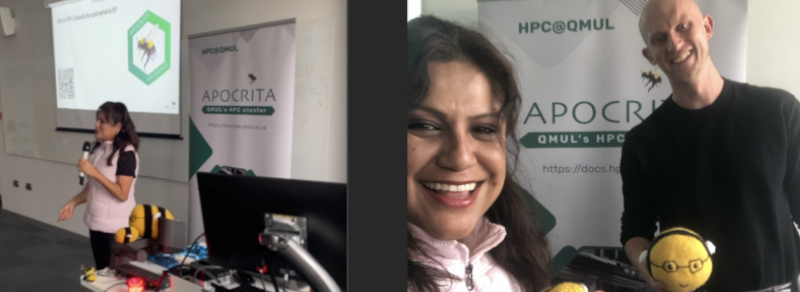
Special thanks to:
- Matthew Higgins, for his invaluable support before, during, and after the session.
- TAFT demonstrators, for assisting the students.
- Vitaly Voloshin, for his excellent coordination previous the session.
- Tom King, Simon Butcher, and Tom Bradford, for technical support and ensuring the session ran smoothly for 83 users on Apocrita.
"We've heard a very positive feedback, especially about the introductory Apocrita sessions, and we're grateful for your continued support." The words from Elisabetta Versace, encouraged high-standard HPC upcoming events.
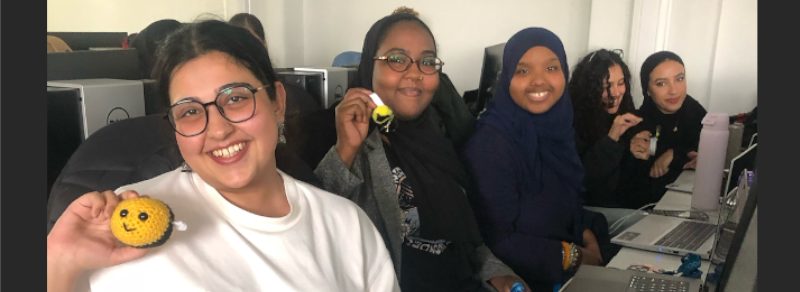
As a fun reward, students who completed all exercises received Apocrita mascots — bees named Beesly and Crisbee.